Overview of MLB Team Relocations
Major League Baseball (MLB), with its long and intricate history, has witnessed a variety of team relocations over the years. These relocations are telling reflections of demographic shifts, economic considerations, and how American sports have evolved over time. The dynamics of these relocations provide a rich context for understanding the transformations within the league over different eras.
Early Relocations: 1900s-1950s
In the dawn of the 20th century, team moves were relatively uncommon in MLB. However, as the century progressed, relocations became more frequent, deeply influenced by economic needs and strategic opportunities. An early instance of team movement, not officially under the MLB banner at the time, was the migration of the Baltimore Orioles franchise to New York in 1903. This team eventually became known as the New York Yankees, a name that would rise to iconic status.
Following World War II, relocations became more pronounced. The St. Louis Browns’ transition to become the Baltimore Orioles in 1954 marked a significant moment in the sport’s history. The move was instigated by dwindling attendance and financial issues in St. Louis. Baltimore promised a more lucrative and receptive market, which ultimately led to their successful transformation into the Orioles.
The Coastal Expansion: 1950s-1960s
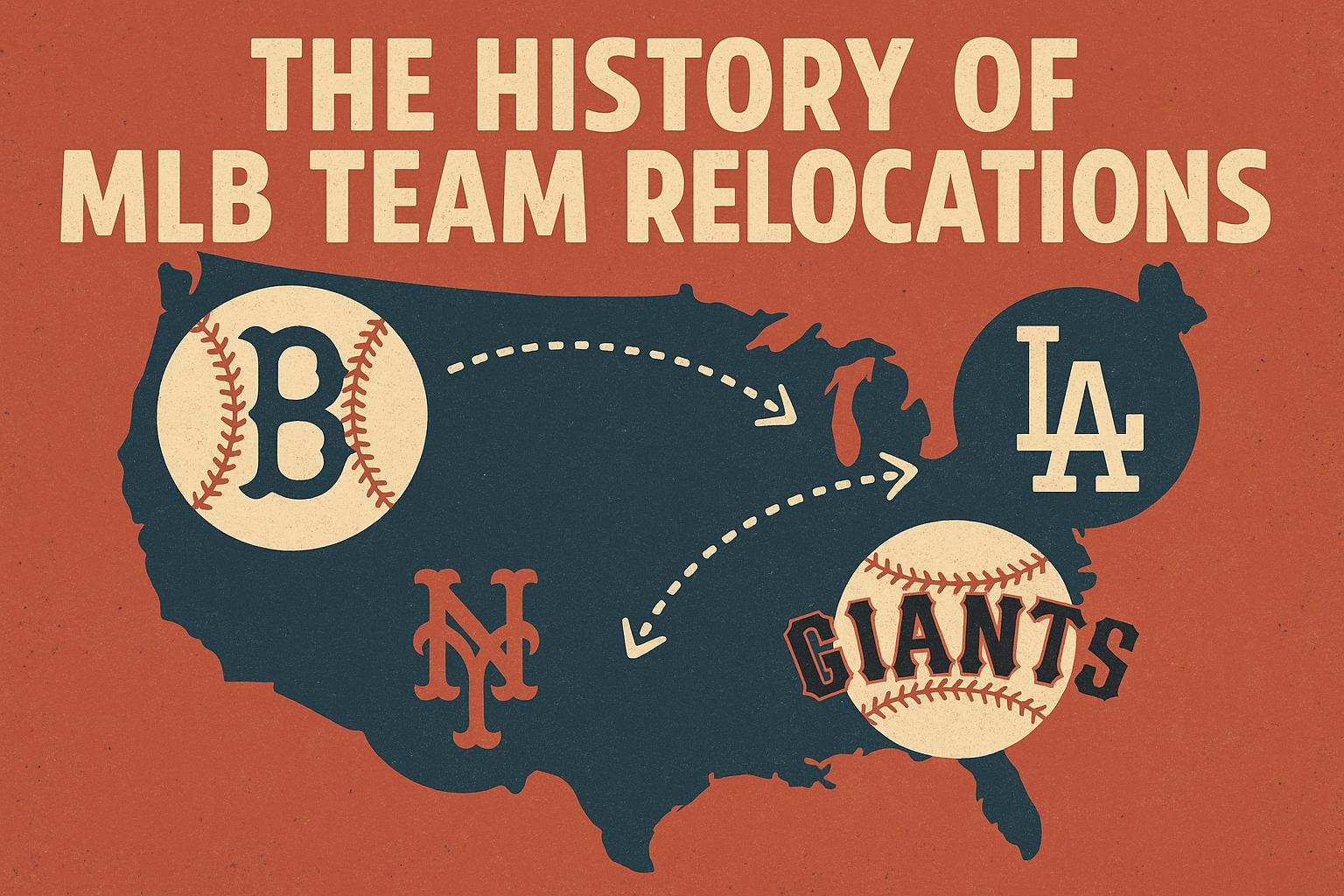
The 1950s and 1960s were transformative years for MLB, particularly noted for the league’s expansion westward. This era is perhaps most famously marked by the relocation of the Brooklyn Dodgers and the New York Giants in 1958. The Dodgers settled in Los Angeles, while the Giants made their new home in San Francisco. These moves were motivated by the burgeoning population and growing market potential of the West Coast, bringing with them a new era of baseball fervor to these regions.
Another significant relocation involved the Washington Senators, who moved to Minnesota in 1961 to become the Minnesota Twins. This decision was influenced by the offer of a modern stadium and the prospect of a more financially stable market.
Mid-Late 20th Century: Continued Shifts
As MLB sought to capitalize on emerging markets, relocations persisted into the mid and late 20th century. A key relocation was the Milwaukee Braves’ move to Atlanta in 1966. By relocating to Atlanta, a city on the rise in the southeastern United States, the Braves aimed to broaden their fan base and capture a larger market share.
In 1970, another notable move occurred when the Seattle Pilots, enduring mounting financial issues and inadequate facilities despite only being in the league for one season, relocated to Milwaukee and became the Brewers. This shift underlined the logistical and financial challenges faced by franchise teams in nascent or financially unstable markets.
Modern Era Relocations
In recent decades, the pace of relocations has slowed down considerably, but they remain a notable aspect of MLB history. A significant modern-era relocation took place in 2005 with the Montreal Expos. Facing poor attendance figures and running into substantial financial troubles, the team was moved to Washington D.C., thereby becoming the Washington Nationals. This marked MLB’s first franchise relocation in over thirty years and was prompted by a combination of economic pressures and the allure of a renewed market.
Factors Influencing Relocations
Various factors have historically influenced MLB team relocations, reflecting broader trends in economics and demographics. Economic factors are often at the forefront, with market size, potential revenue streams, and stadium agreements playing critical roles. Teams frequently relocate seeking larger or more active markets to secure financial stability and prosperity for the franchise.
Demographic changes also significantly influence relocation decisions. Population increases or decreases in particular areas can determine a team’s viability in its current location or the attractiveness of a potential new home. In addition, political support and robust infrastructure, encompassing transportation systems and modern stadium facilities, are crucial in these considerations.
For those intrigued by the specifics of individual relocations and the factors that influenced them, there are abundant resources available. These encompass historical narratives and expert analyses by sports historians, which elucidate how MLB teams have evolved and navigated changes over the years. Such resources can provide a deeper understanding of how teams have strategically moved and adapted in response to the ever-shifting demands of the business and sport of baseball.
Exploring these relocations not only enriches our understanding of baseball’s history but also sheds light on the broader socio-economic shifts that have impacted American sports. By examining these movements, it becomes clear how teams have not only adapted to their immediate circumstances but also shaped the path of modern professional baseball.