Understanding the Impact of Dominant Pitching Rotations in MLB History
In the vast history of Major League Baseball (MLB), the role of a strong pitching rotation has often been pivotal in shaping the fortunes of teams. The importance of having multiple ace-level pitchers in a rotation cannot be overstated, as it represents a strategic asset that can lead to sustained success both in regular season games and in intense postseason battles.
Atlanta Braves of the 1990s
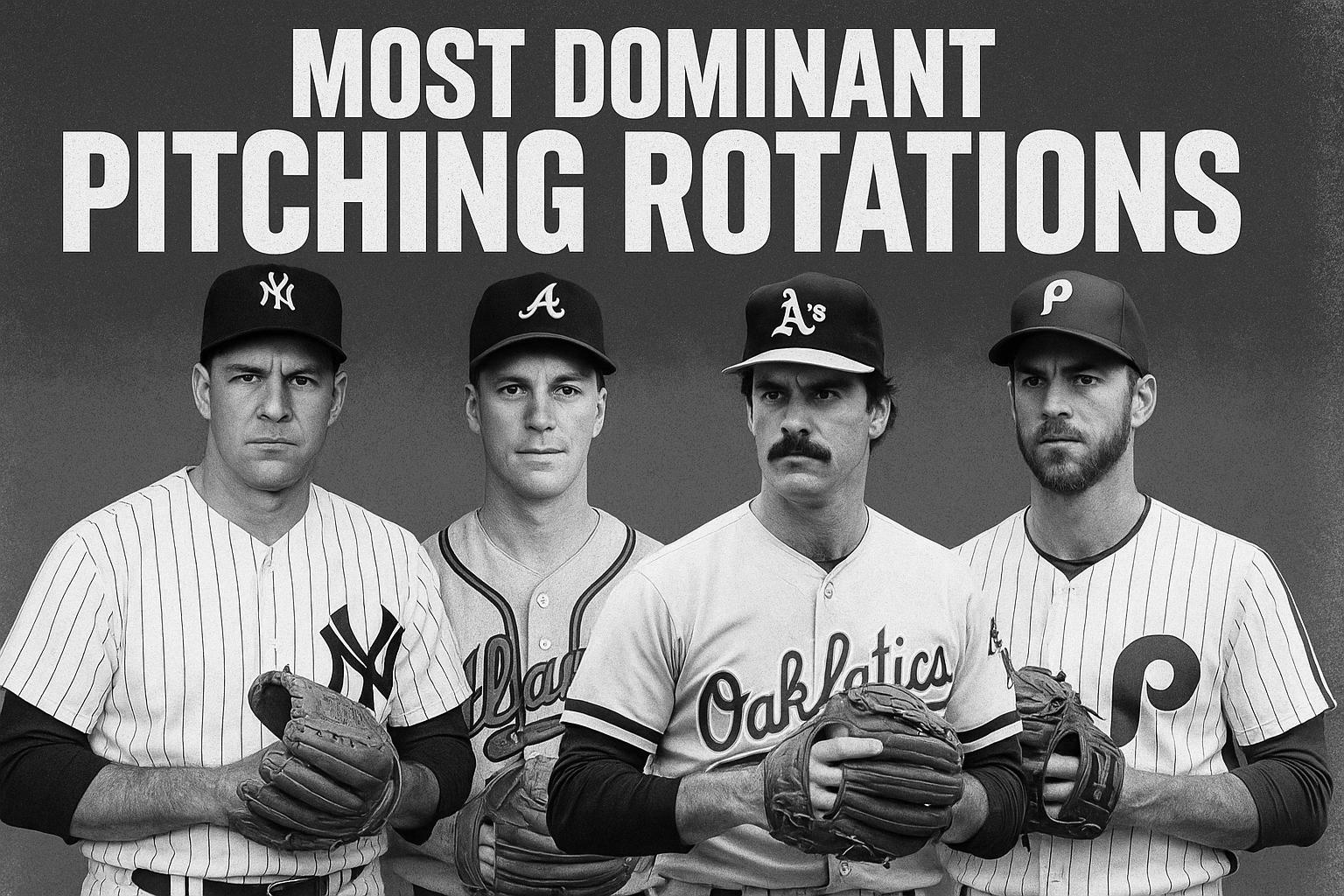
The Atlanta Braves, during the 1990s, crafted a pitching triumvirate that is still revered today. The effectiveness of Greg Maddux, Tom Glavine, and John Smoltz on the mound was a critical component of the Braves’ many successes, including their continuous string of division titles throughout the decade. Maddux’s ability to maintain accuracy and control, coupled with Glavine’s skillful use of a changeup, complemented Smoltz’s aggressive pitching style. This formidable group created an intimidating presence for opposing teams.
Accomplishments and Significance
Individually, these pitchers amassed a number of awards, including several Cy Young Awards, which recognize the best pitchers in the league. The collective strength of Maddux, Glavine, and Smoltz was most apparent during their dominant 1995 season, which culminated in winning the World Series. Their achievements have earned them a place in the Baseball Hall of Fame, validating the impact they had not only on the Braves but on MLB as a whole. They exemplified how a solid pitching staff could transform a team into a perennial contender.
Philadelphia Phillies in 2011
In 2011, the Philadelphia Phillies showcased a pitching rotation considered as one of the most formidable in recent memory. The presence of Roy Halladay, Cliff Lee, Cole Hamels, and Roy Oswalt collectively brought unmatched strength and versatility. Each pitcher brought his own style and expertise to the mound, forming a cohesive unit that drove the team throughout a successful regular season.
Impact on the Season
That year, Philadelphia secured 102 wins, marking a franchise record. Although their postseason run ended prematurely, the rotation’s stellar performance during the regular season demonstrated how having a reliable starting rotation could lead to consistent success. Halladay and Lee stood out with their impressive sub-3.00 ERAs, underscoring the importance of effectiveness and endurance.
Oakland Athletics of the Early 1970s
The early 1970s saw the Oakland Athletics rise to prominence, and their success was in no small part due to their exceptional starting rotation. The prowess of Catfish Hunter, Vida Blue, and Ken Holtzman formed the backbone of a team that achieved the remarkable feat of winning three consecutive World Series championships from 1972 to 1974.
Legacy of the A’s Rotation
During this successful period, both Hunter and Blue received Cy Young Awards, an affirmation of their impact on the field. Their dominance made it clear that having a well-rounded pitching rotation was vital. The Athletics’ consecutive titles emphasized the long-term value of investing in a strong pitching staff, setting a benchmark for future teams.
Sandy Koufax and the Los Angeles Dodgers in the 1960s
In the 1960s, the Los Angeles Dodgers were led by pitching great Sandy Koufax, whose performances were nothing short of extraordinary. Partnering with Don Drysdale, Koufax formed part of a rotation that carried the Dodgers to multiple championships, with titles in 1963 and 1965 highlighting their era of dominance.
Koufax’s Unmatched Expertise
Koufax’s career during this decade remains one of the most impressive in baseball history. His multiple Cy Young Awards and an MVP award are a testament to his extraordinary influence on how the game was played. The unprecedented strikeout numbers and the very low earned run averages that embody Koufax’s career have enshrined him as one of the all-time greats, setting a standard for pitching excellence for years to come.
Conclusion
The narratives of these historic MLB pitching rotations illustrate how crucial aces and solid, skillful rotations are in the tapestry of baseball greatness. From the structured efficiency of the 1990s Braves to the overpowering presence of Koufax with the Dodgers, these examples highlight how influential a dominant pitching rotation can be in shaping a team’s destiny. They serve to inspire current and future generations of pitchers, providing a model for what can be achieved through consistent excellence and strategic team building. Through their successes, these legendary rotations have left an indelible mark on the history and evolution of Major League Baseball.