
Major League Baseball’s Approach to Weather Delays
In the realm of Major League Baseball (MLB), the interaction between the sport and weather elements is an unavoidable occurrence due to the predominantly outdoor nature of the games. As a result, weather delays emerge as a common aspect, brought about by conditions such as rain, lightning, or other forms of extreme weather events. To address these interruptions, MLB has put in place a framework of protocols tailored to handle these circumstances, with the dual objectives of ensuring the safety of players and fans, as well as striving to complete games within their scheduled timings.
Decision-Making Authority
The decision-making authority regarding weather-related interruptions in MLB is typically vested in the home team’s management. Yet, a shift in this authority occurs once a game commences, whereby the responsibility is transferred to the umpires. According to MLB regulations, the umpire-in-chief is granted the authority to suspend or halt a game if weather conditions necessitate such action. This allocation of power underscores the importance of ensuring that players’ safety and optimal game conditions are prioritized, with decisions being made by individuals specifically trained and focused on these aspects.
Evaluating Weather Conditions
During the process of deciding whether to delay a game, several factors are taken into account. Essential considerations pertain to the intensity and persistence of the weather event, the state of the playing field, and the overarching imperative of player safety. Ground crew expertise and meteorological data are indispensable elements that contribute to the evaluation process, allowing for informed decisions to be made in real-time regarding the continuation or postponement of a game.
Role of Ground Crew
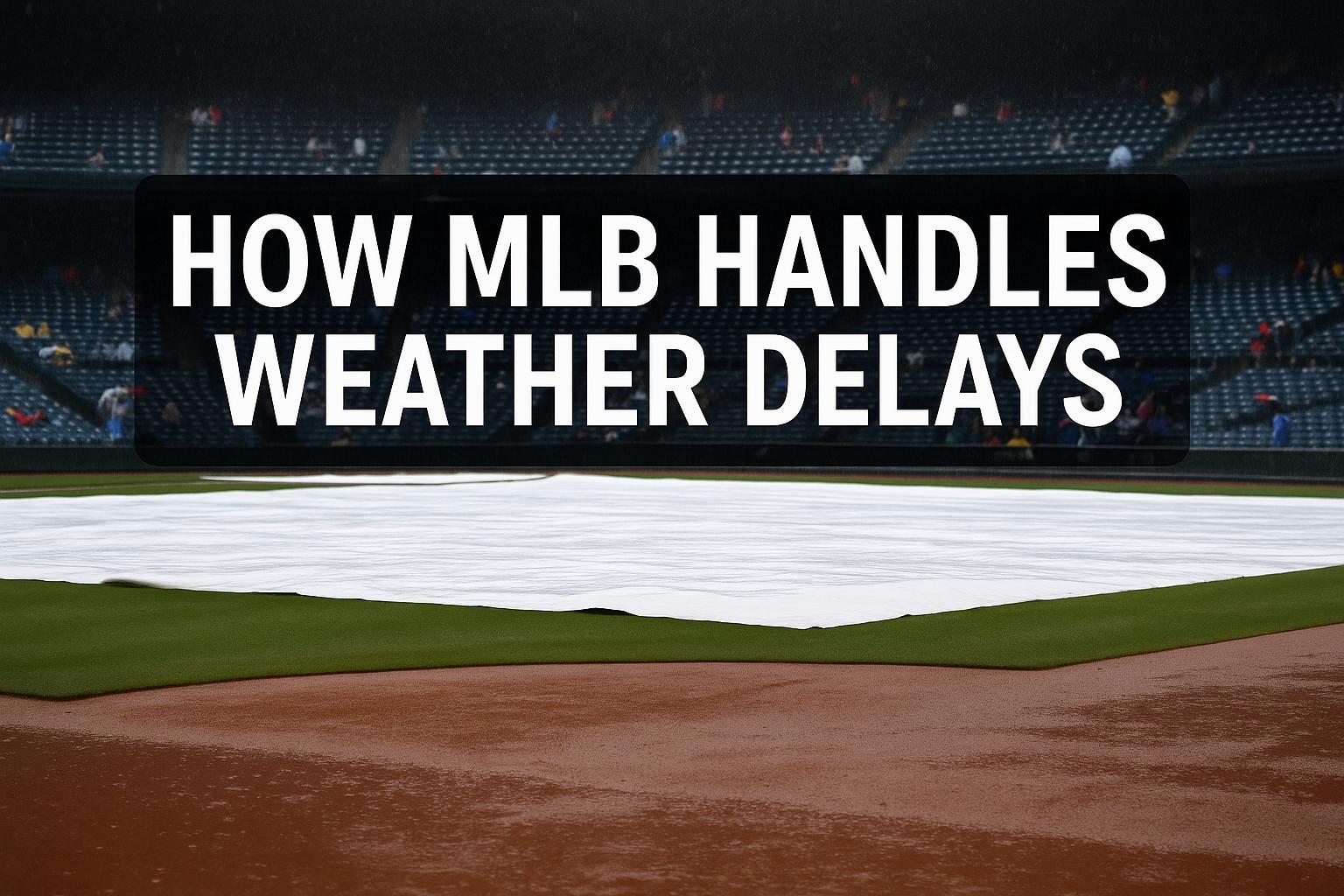
Ground crews play a pivotal role in both evaluating field conditions and preparing the playing surface for the safe resumption of play. One of their primary responsibilities involves the use of tarpaulins to shield the playing field during rain events. In addition, they deploy specialized equipment to extract standing water from the field. The effectiveness and swiftness with which the ground crew operates are critical in curtailing the duration of delays and in preventing damage to the playing surface, enabling the resumption of play under safe conditions.
Communication with Stakeholders
To ensure that all interested parties are kept informed of weather-induced delays, MLB teams bear the responsibility of disseminating relevant information. This communication is facilitated through a range of channels, such as public address announcements within stadiums, team websites, and various social media platforms. Through these mediums, updates are provided to fans regarding estimated timelines for game resumption, as well as decisions pertinent to the continuation or rescheduling of games. Effective communication is thus a key component in managing stakeholders’ expectations and maintaining transparency throughout the process.
Game Resumption and Postponement
When weather conditions show signs of improvement, the task of evaluating the field’s readiness for play falls to the umpire-in-chief. This evaluation involves a comprehensive assessment to determine if conditions are conducive to safe play for all participants. If, however, the game cannot safely or reasonably be completed, postponement becomes a necessary course of action, with games being rescheduled for later dates. In instances where a game has progressed to five innings or more (or 4.5 innings with the home team leading), it is deemed an official game, according to MLB rules, even if weather conditions necessitate its suspension.
Doubleheaders as a Result of Postponements
When weather conditions force the postponement of games, MLB commonly addresses the scheduling gaps by organizing doubleheaders on subsequent dates. A doubleheader consists of two games played consecutively on the same day, allowing all initially scheduled games to be completed. This approach is instrumental in preserving the integrity of the league’s schedule, ensuring that all teams are on par in terms of games played, which is critical for the fairness and balance of the competitive structure.
Conclusion
The management of weather delays within MLB is characterized by a methodical and systematic approach, highlighting the league’s commitment to safety and minimization of disruptions. By adhering to clearly delineated protocols and actively engaging all relevant stakeholders, MLB ensures that both the safety of players and the experience for fans receive utmost attention when weather conditions interrupt the game. The careful orchestration of responsibilities across different entities within the league exemplifies a model of efficiency and responsiveness, underscoring MLB’s adept handling of unexpected weather-related challenges.