Introduction to MLB Player Performance Metrics
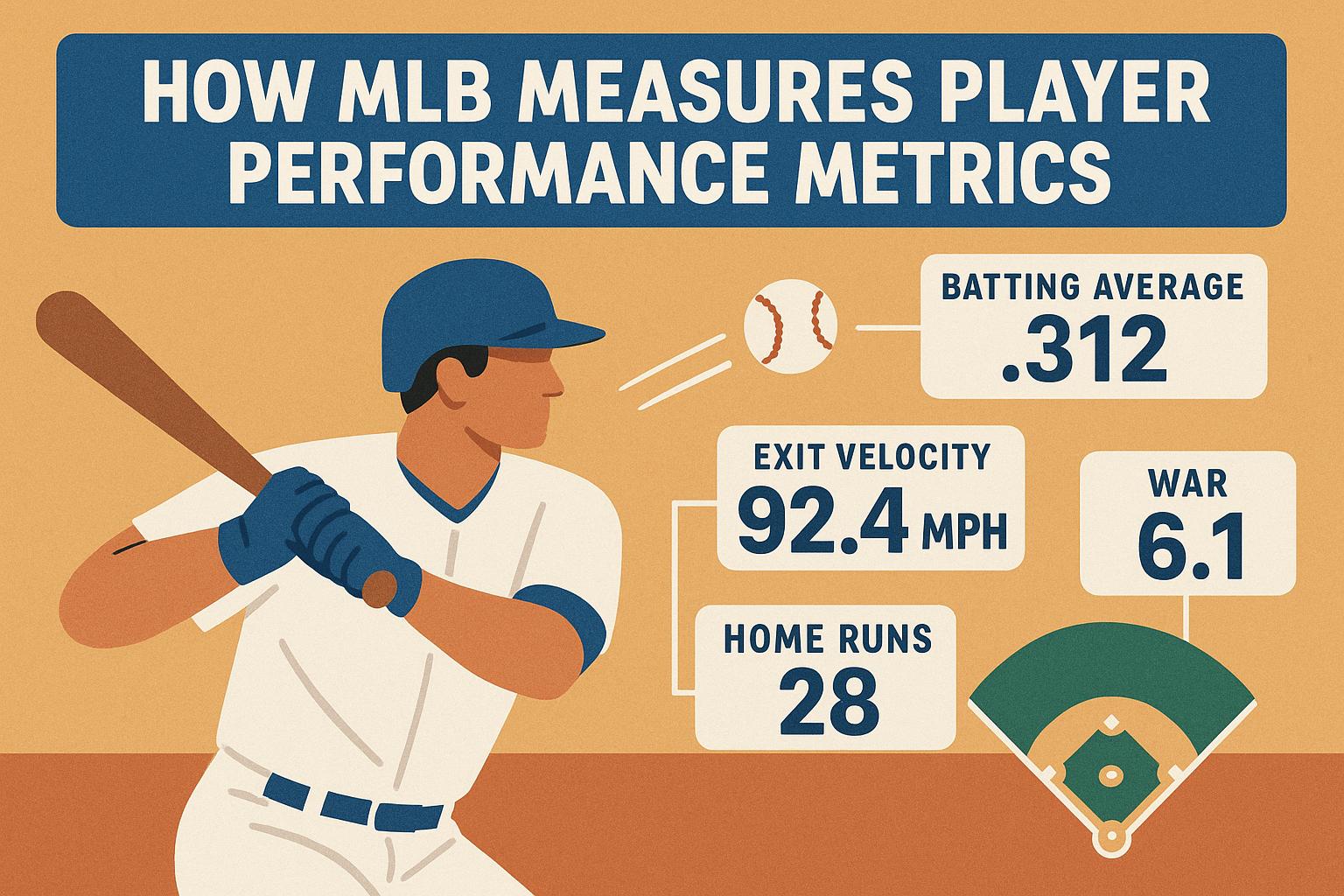
Major League Baseball (MLB) employs a vast array of metrics to evaluate player performance, transcending traditional statistics such as batting average (AVG) and earned run average (ERA). Over the years, the advent of advanced analytics has considerably improved the accuracy of evaluations. These sophisticated statistics enable a richer understanding of a player’s value, facilitating teams in making informed decisions regarding player acquisitions and development.
Batting Metrics
While traditional batting metrics such as hits, home runs, and runs batted in (RBIs) remain significant, they offer only a fragmentary insight into a player’s performance.
The On-base plus slugging (OPS) is a compound statistic that amalgamates a player’s on-base ability (OBP) with their power-hitting capability (SLG). An OPS exceeding .800 is often deemed excellent, as it signifies a strong balance between reaching base and slugging power. However, OPS does not entirely capture the quality of each hit or walk in creating runs.
The Weighted On-Base Average (wOBA) provides a more nuanced perspective by assigning different values to each method of reaching base, thereby reflecting the actual run value each event contributes. This comprehensively quantifies a player’s offensive contributions, offering richer insight than conventional on-base or slugging metrics alone.
For a more thorough evaluation, Wins Above Replacement (WAR) stands out. It is a comprehensive statistic used to gauge how many additional wins a player generates over a hypothetical replacement-level player. WAR integrates various dimensions of a player’s game, such as batting, base-running, and fielding performance, offering insights into their all-around impact on the team.
Pitching Metrics
In the realm of pitching, while ERA continues to serve as a fundamental measure, it fails to consider fielding influences or park factors. This limitation necessitates a shift towards more specialized metrics.
Fielding Independent Pitching (FIP) is devised to approximate a pitcher’s performance by scrutinizing their capacity to avoid home runs, walks, and strikeouts without factoring in defense. FIP provides a clearer evaluation of a pitcher’s capabilities by isolating these elements from team defense.
Moving further, the Strikeout-to-walk ratio (K/BB) is essential for assessing a pitcher’s control over the game. Higher ratios are indicative of superior performance, showcasing a pitcher’s ability to command the strike zone and overpower hitters.
Additionally, Expected Fielding Independent Pitching (xFIP) refines FIP by incorporating the league’s average home run-to-fly ball rate instead of the player’s actual rate. This adjustment makes xFIP a valuable tool for predicting future pitching performance, emphasizing skill over chance incidents.
Fielding Metrics
Defense has traditionally been a challenging facet to quantify in baseball, but recent advancements have greatly enhanced its measurement.
Metrics like Defensive Runs Saved (DRS) and Ultimate Zone Rating (UZR) offer modern mechanisms to assess fielding prowess. These statistics quantify a player’s defensive contributions by examining their actions relative to league averages. They account for the difficulty of plays and gauge how effectively a player aids their team’s run prevention efforts.
Both DRS and UZR consider numerous factors, including range, arm strength, and error rate, providing a pragmatic measure of fielding performance which traditional stats often overlook. These metrics furnish teams with precise insights into how a player’s defensive skills contribute to the overall team dynamic, supporting strategic roster decisions.
Conclusion
Although venerable metrics like batting average and ERA still maintain their place in MLB, the integration of advanced analytics delivers a more intricate view of player performance. These contemporary metrics enable teams to conduct evaluations that encompass not only offensive output but also defensive capabilities and pitching skills, thereby enhancing strategy in the modern data-oriented baseball landscape. As teams continue to seek competitive edges, the utilization of diverse performance analytics will influence player acquisition, roster development, and game-day decisions. For a deeper dive into MLB’s statistical landscape, consider exploring MLB Stats.